Skip to content

MINDCENTRAL

From clinical practice. For better organised work.

Creator, founder and CEO of a product connecting the clinical and organisational needs of healthcare practices.

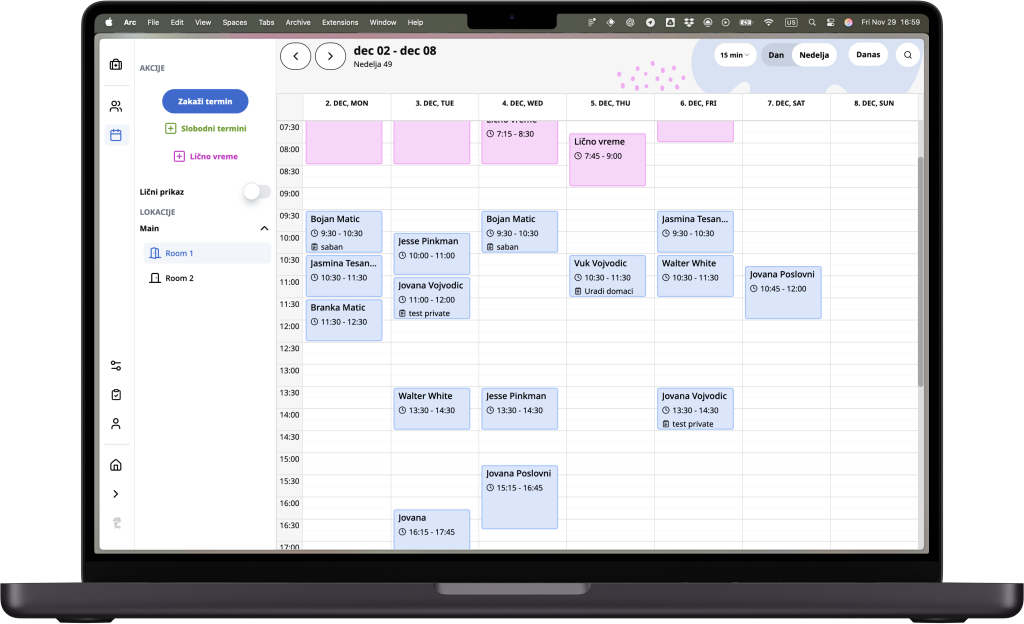
MindCentral appointment calendar

Appointment calendar · image from the public MindCentral website.

From an appointment to a connected workflow.

MindCentral brings scheduling, patient records, medical documentation and practice administration into one system. A practice can follow appointments and documentation in a shared working environment. Available features and implementation details are presented on the product website.

THE ORIGIN

Everyday work as the starting point.

Running a practice raises questions beyond an individual appointment: how to organise scheduling, maintain continuity of documentation and connect the work of different professionals.

MindCentral grew out of that experience. Its initial focus was an information system for mental health. As creator, founder and CEO, I connect the clinical perspective with the direction of product development.

Origin: mental health

An information system shaped by the needs and everyday workflows of psychiatric and psychotherapeutic practice.

Development: broader outpatient care

The product is expanding to more medical specialties and outpatient organisations. Current functionality and terms are described on the official product website.

Direction: hospital settings

The longer-term direction is support for complex hospital settings, where different specialties, teams and levels of organisation work together.

My role

The original product concept, founding and leadership, connecting clinical needs, work organisation and technology development.

PRODUCT & COLLABORATION

For practices and partners.

For product demonstrations, features, implementation and use, visit MindCentral. For a conversation about my work on the product or professional and research collaboration, you can also contact me directly.

MindCentral is a product I founded and lead. I disclose this relationship when discussing its development or wider healthcare technology topics.

MindCentral: questions about its origin and development

How do clinical practice and an information system connect?

Work in a practice also depends on clear schedules, information being available to authorised people and well-defined responsibilities. Development starts by understanding these everyday tasks. Clinical experience helps identify a problem; the practical value of a solution depends on how it fits the team’s work.

How should a practice approach a product discussion?

Describe the current workflow: how an inquiry is received, how appointments are booked, how documentation is maintained and how information passes between team members. Identify places where information arrives late or the same detail has to be entered more than once. This makes a demonstration more useful and helps the team ask concrete questions.

Where can available features be checked?

The official website provides product information and an option to request a demonstration. It is the place to check current functionality and terms. This page explains my involvement in the system’s origin and development. Available functions, ongoing development and long-term plans are described as separate stages.

How does this relate to artificial intelligence research?

Practice organisation and AI research in mental health are related subjects with different requirements. A useful schedule or a well-organised record does not in itself validate a clinical conclusion. Questions of assessment, limitations and safety are discussed on the research and AI page.

For a professional or research collaboration, describe your organisation and the question you would like to explore. For a product discussion, a demonstration with the system’s team is the most useful next step. Clear questions make it easier to understand how a tool could fit a particular practice.

Clinical experience as a starting point

A useful product discussion starts with a concrete account of everyday work. Consider who will use the system, which information they need and how the team checks that a task has been completed. These details help connect a demonstration with the practice’s actual circumstances.